Paradise Lost,
Book 1
extracts used to influence
positive prompts
“Here Satan … after a certain space recovers, as from confusion, calls up him who next in Order and Dignity lay by him; they confer of thir miserable fall.” [The Argument]
workflow checkpoint: flux1-dev-fp8.safetensors
LoRA: flux-lora-collection / realism_lora_comfy_converted.safetensors
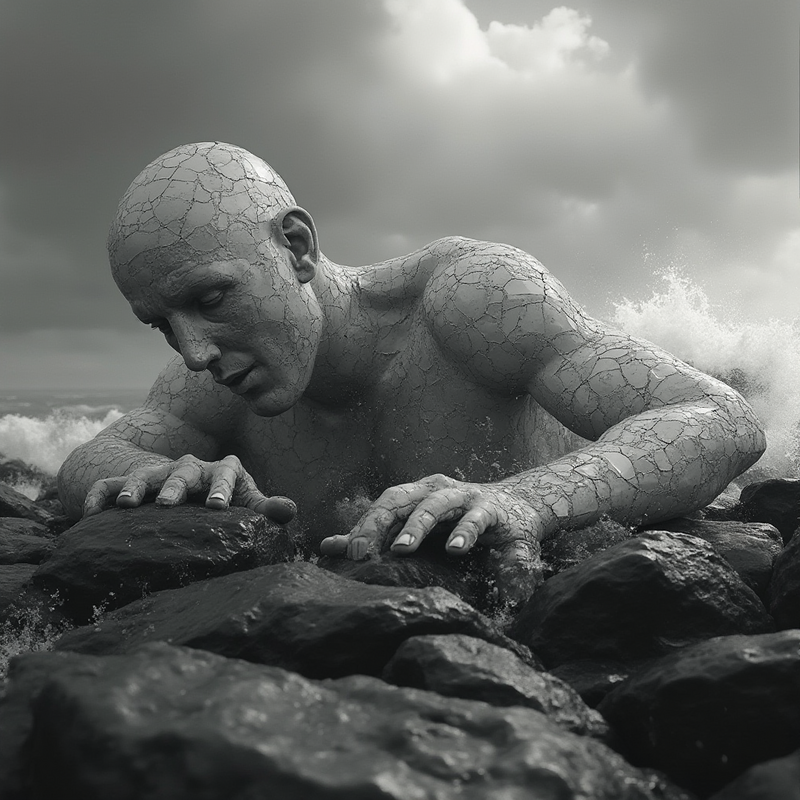
ComfyUI_00237
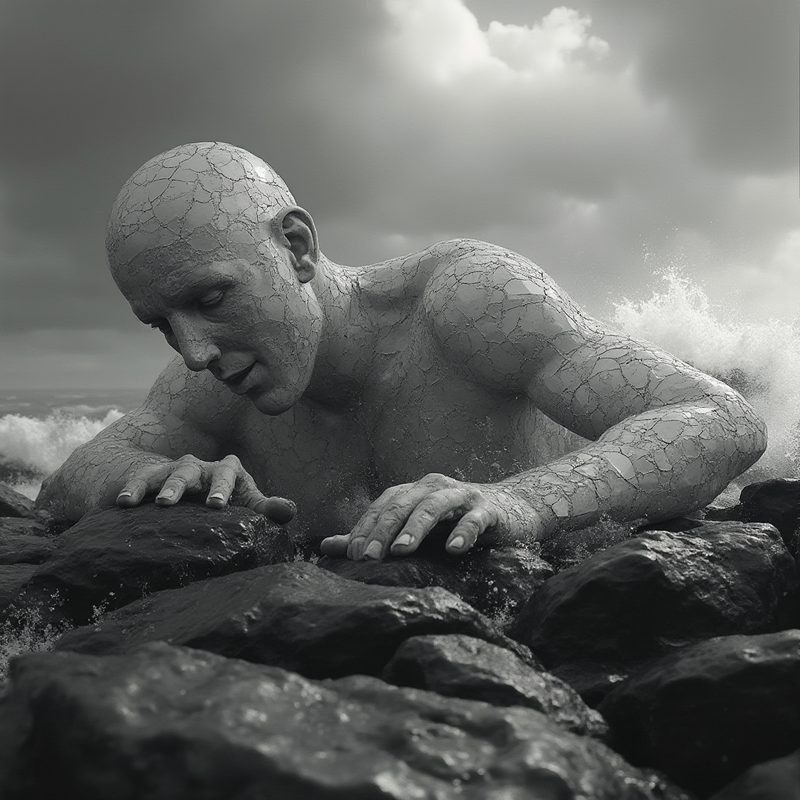
ComfyUI_00307
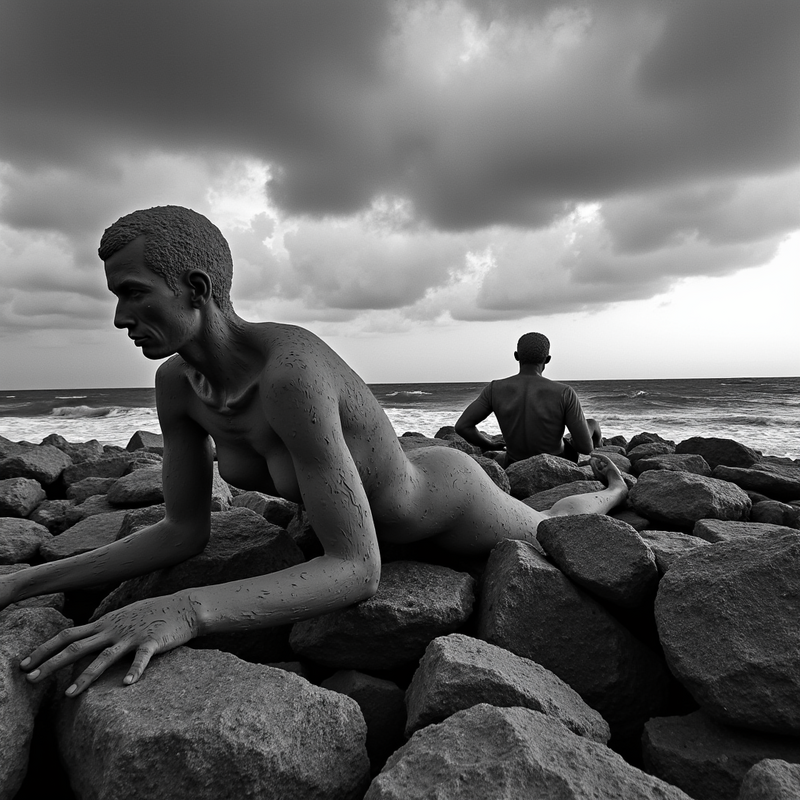
Ilia’s Low-Rank Adaptation (LoRA) model trained on a dataset of 77 photographs
ParadiseUnseen_00008
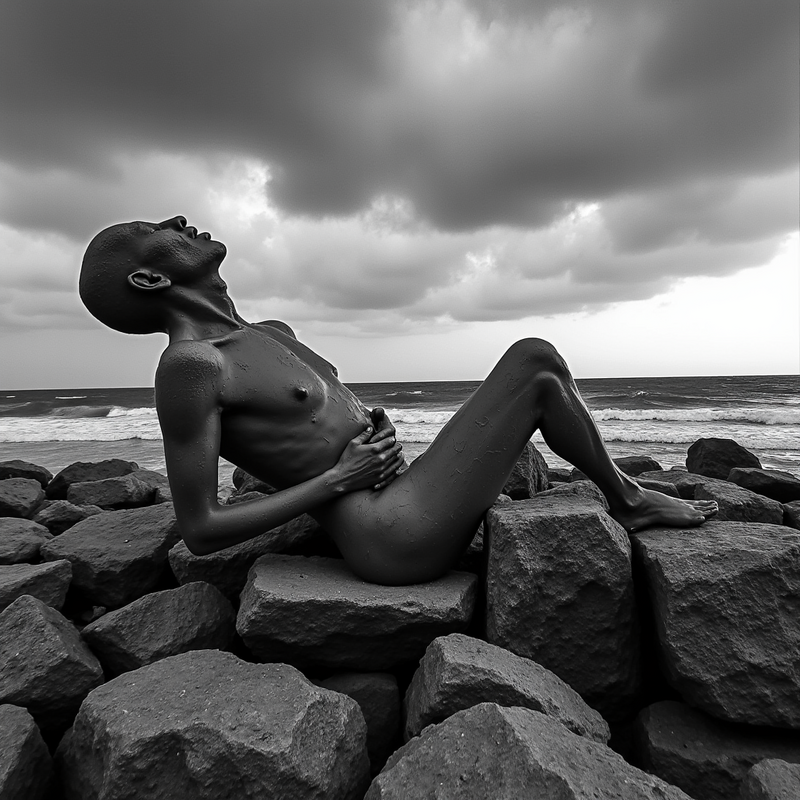
ParadiseUnseen_00001
summary
This selection marks my first attempts at generating images inspired by Paradise Lost. With Ilia’s help, I learned to use RunComfy (ComfyUI Cloud), applying my photography skills to frame compositions — using “closeup” as I would when photographing with shortsighted vision.
The first two columns show how replacing “person” with “human” added detail to the fingers (ComfyUI_00307). The description “cracking glass” aimed to challenge the polished appearance typical of AI-generated images, which often lack diversity and perpetuate stereotypes of minority groups, age, and gender.
Using Ilia’s model trained on my small photo library, the shift from “people” to “human” again significantly affected the results. I avoided negative prompts and fixed the seed at 0 to ensure consistent outputs — important given my fragmented vision. The prdlst tag linked the image generation to Paradise Lost.
Milton’s blindness while writing Paradise Lost resonated with my own sensory experience. This informed my exploration of the antihero, disobedience, and chaos, with Satan’s androgyny particularly evident in the Paradise Unseen series.
My library, curated to reflect diversity in age, gender, and body and hair types, produced more nuanced results than earlier tests — encouraging further work with a larger, more representative dataset.





 Karren Visser