Perception as Practice frames seeing as an active, evolving process rather than a fixed ability. It responds to questions I am often asked: “What do you see?” and “How much do you see?”
I cannot compare my vision with others’, as I was born severely short-sighted and my condition is degenerative. Instead, this work shifts focus away from loss and towards how perception is continually shaped through attention, adaptation, framing, proximity, and description.
Across the ten images below, photography becomes both method and language, a way to communicate experience and to bridge sighted and visually impaired perspectives. The work draws attention to partial sight not as a limitation, but as a position from which alternative, nuanced understandings of the world can emerge.
Select an image below to access its caption.
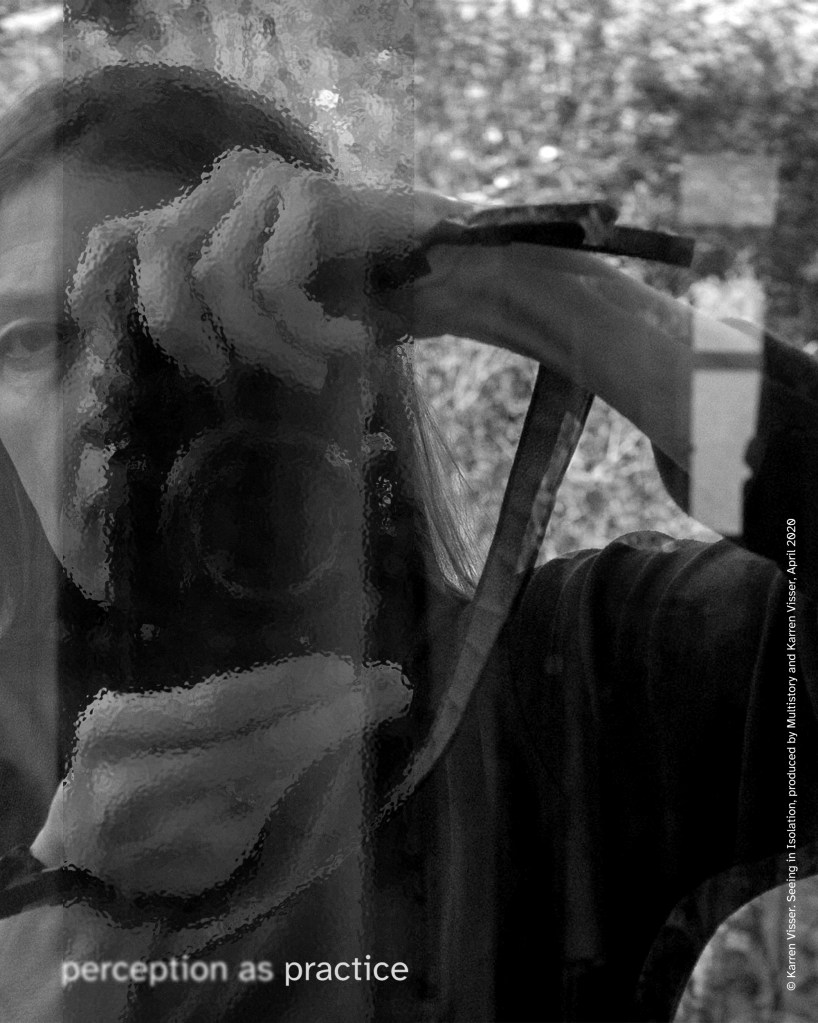
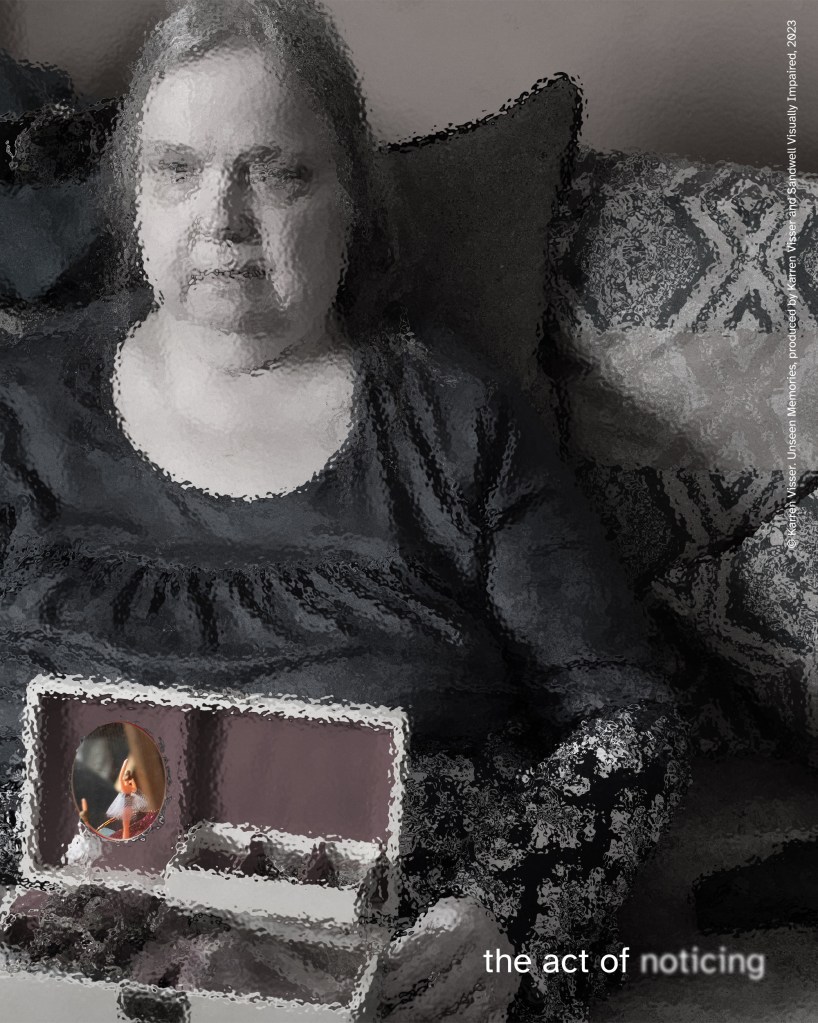
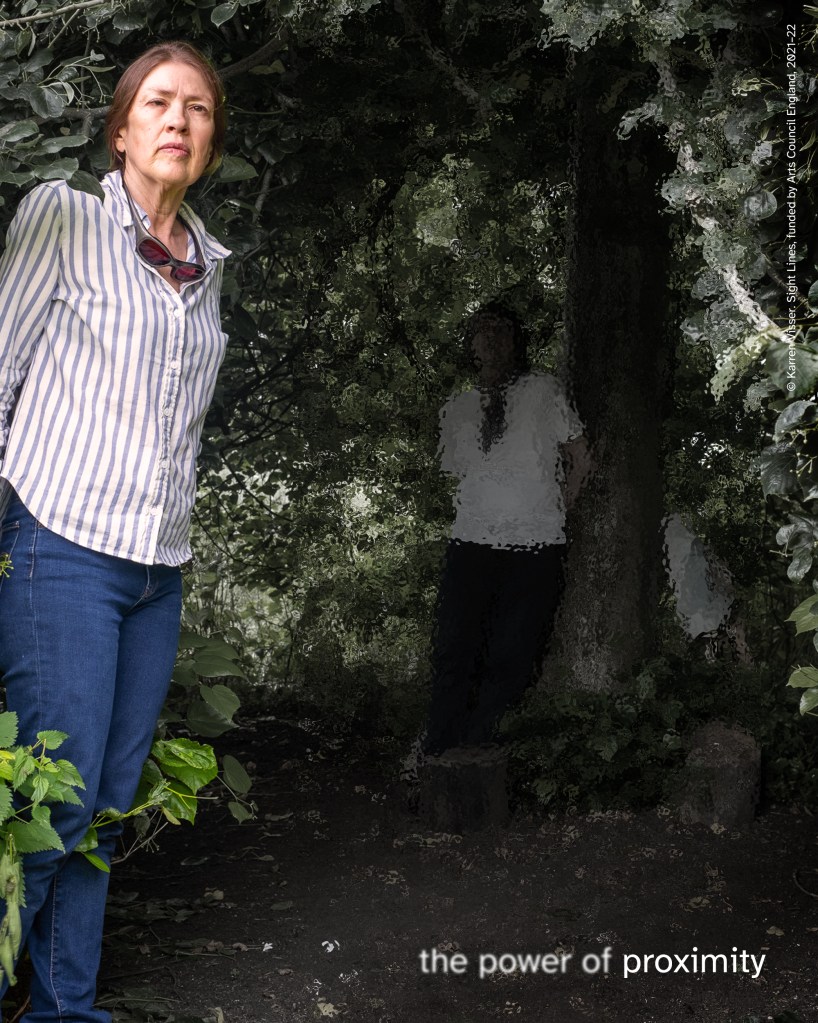
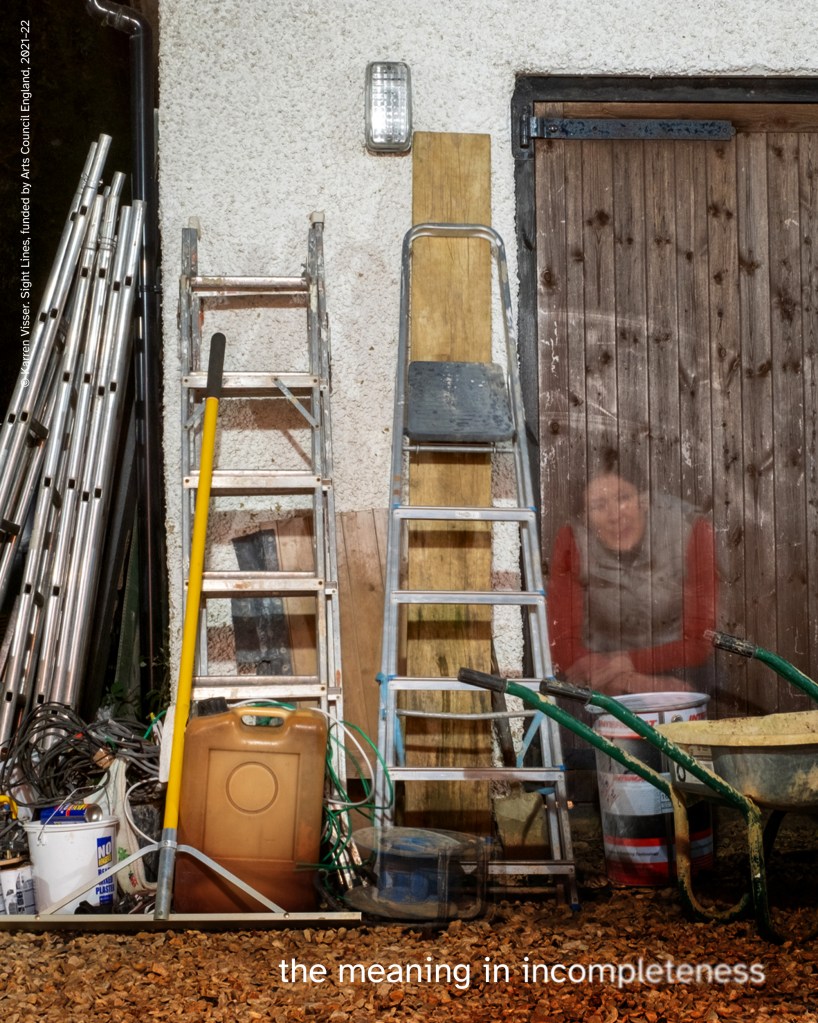
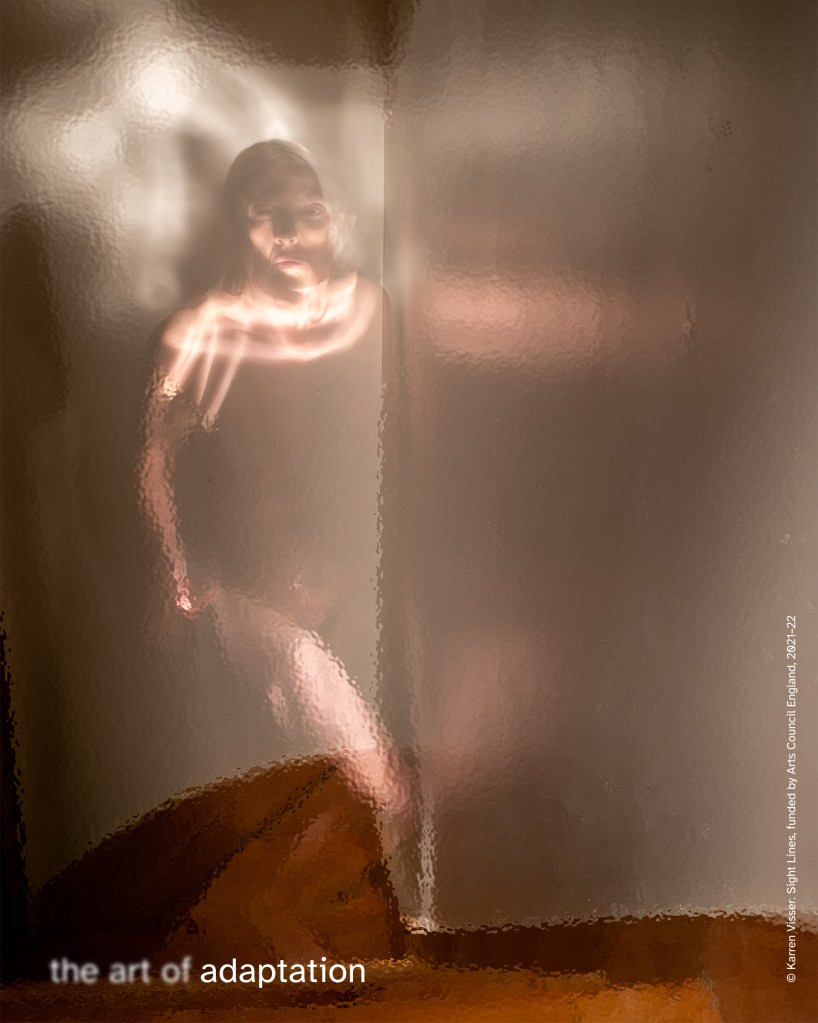
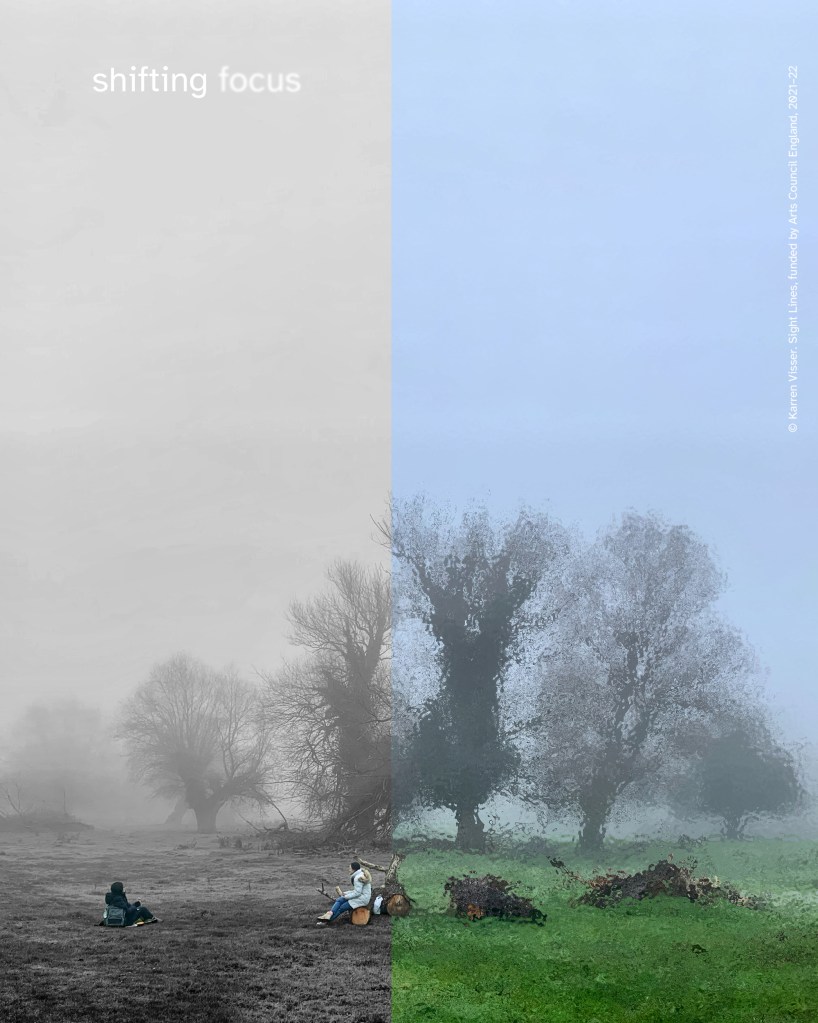
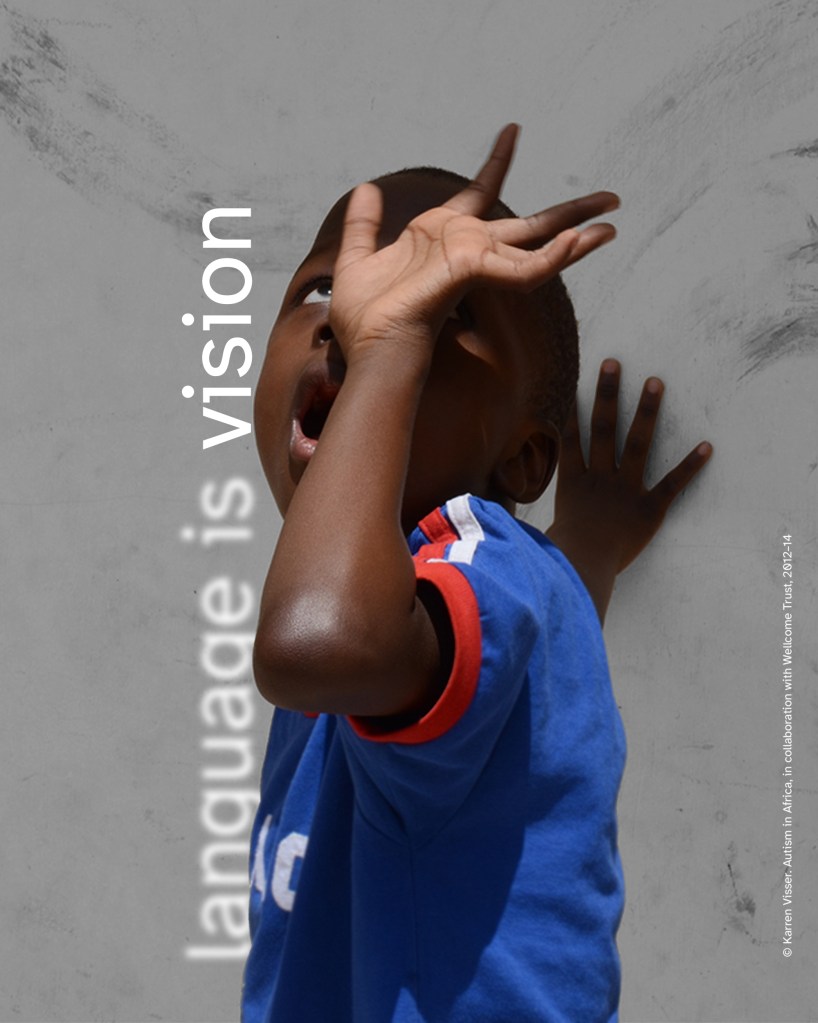
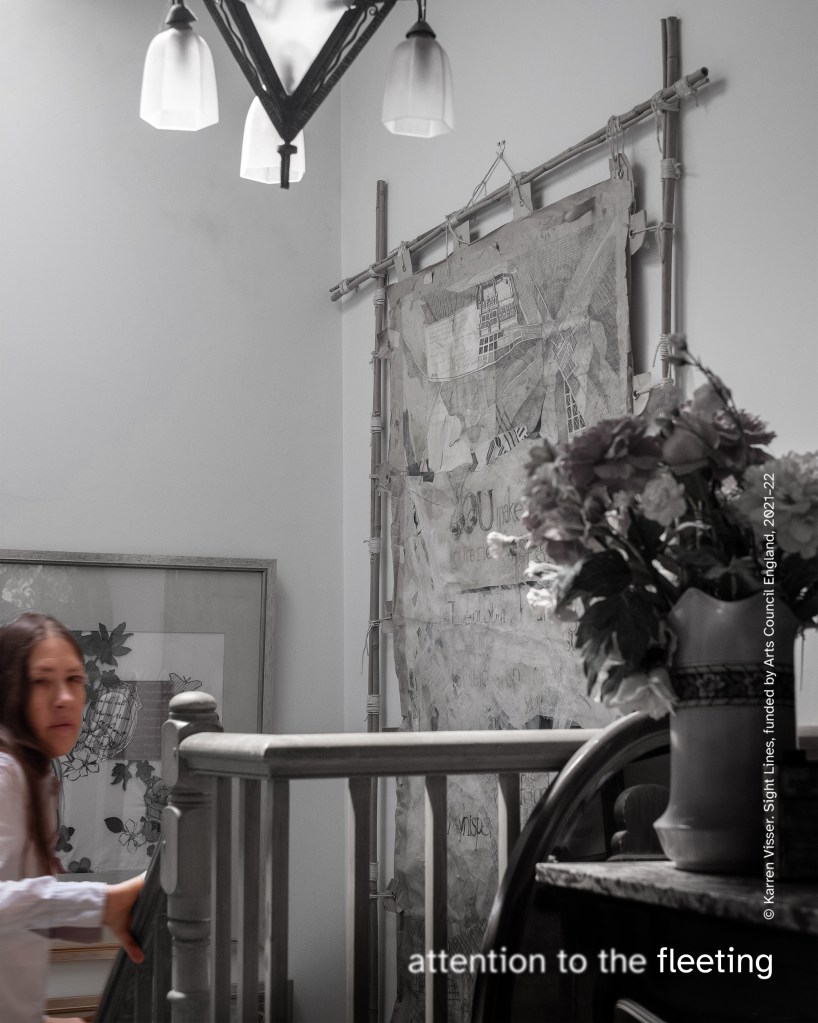
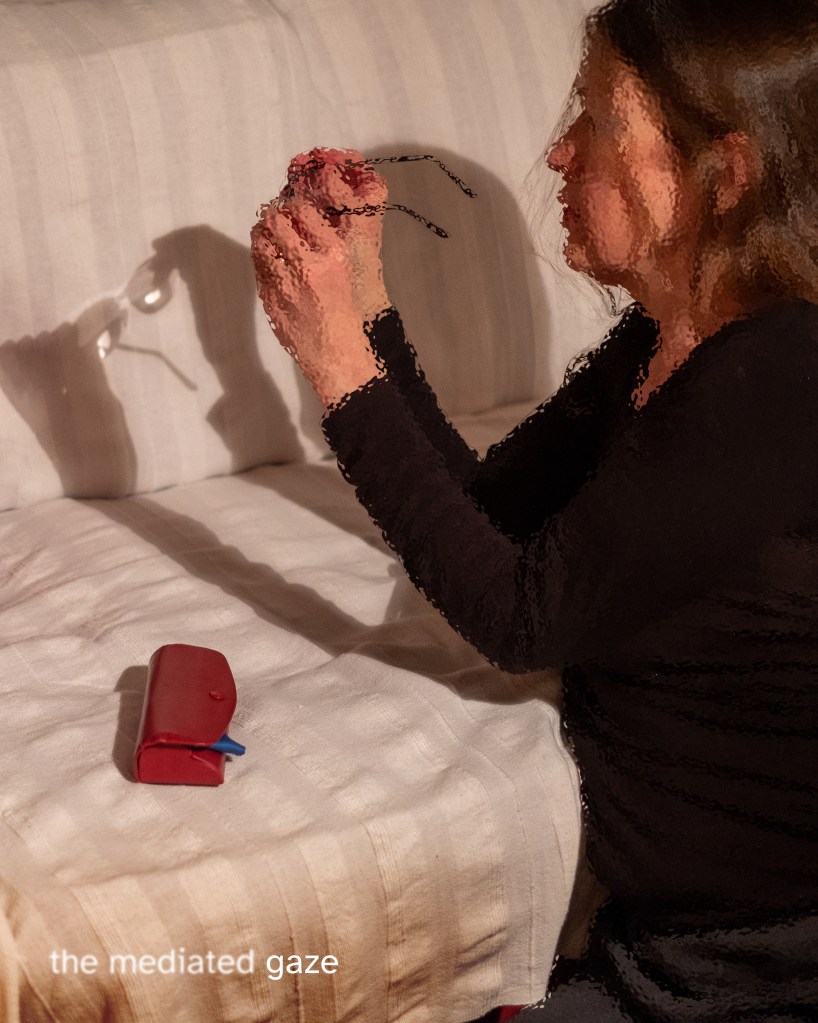
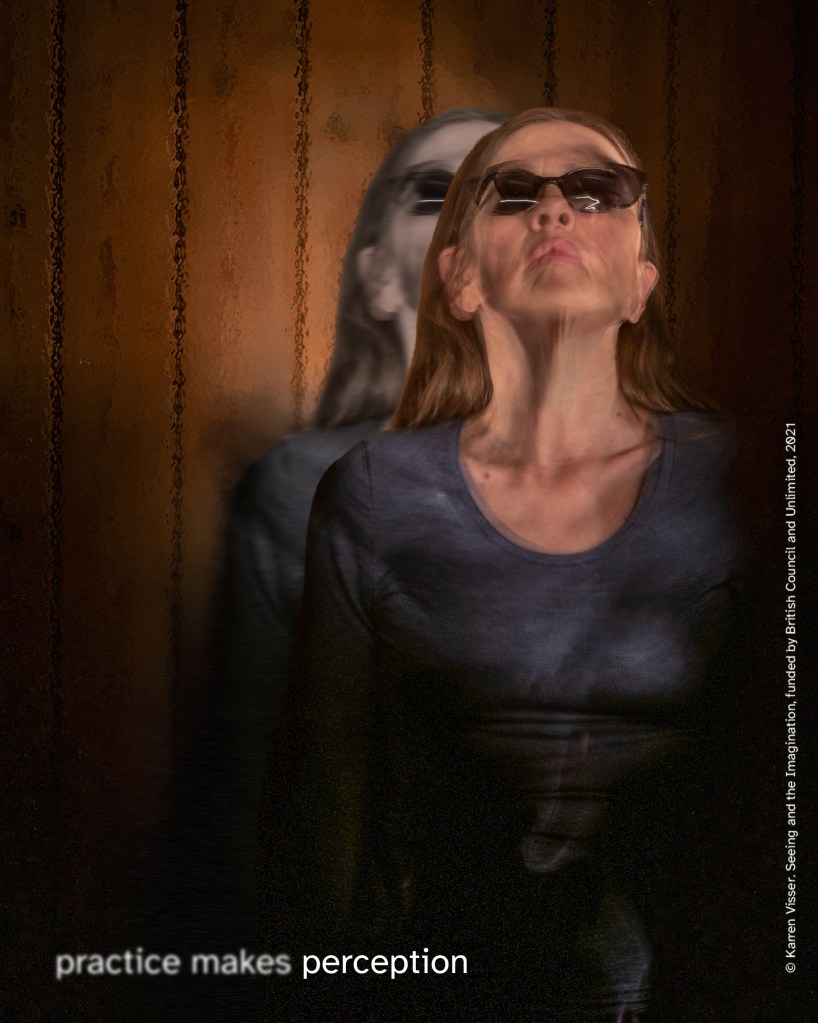
This self-portrait holds the feeling of living between knowing and not knowing, presence and distance. My sight loss is progressive, and I live with a heightened awareness of uncertainty in perception. There are benefits, too. I notice details and moments many sighted people miss because they’re often distracted or unaware. It’s a way of seeing I’ve learned to rely on, slowly, patiently, attending to what shifts and changes. Over the coming weeks, I’ll share what perception means to me, not as something fixed, but as practice. Together, these posts will trace the path of my work and reveal how its themes connect.A detail jumps out at me while its context is a blur or non-existent. By rendering the scene in desaturated, blurred tones while keeping the mirror of the jewellery box in sharp focus and colour, my photograph mimics the concept that perception is selective. I want to direct the viewer’s eye away from the “obvious” subject (the woman) to a minute detail, in the way I often see, demonstrating that seeing is an active, attentive process. It also highlights that understanding comes through indirect means, looking at a reflection rather than the object itself, which produces an alternative way of seeing.The adaptation of a self-portrait with my mother to create a “depth of field” ripple effect shows that distance is often ambiguous for me. What might be nearby can appear far away, and vice versa. This composition demonstrates that seeing is not a passive ability that works equally at all ranges; it is a physical practice involving all the senses, especially touch, sound, and smell. Clarity is something I must constantly move toward. By blurring the distance, the design invites the understanding that for people who are partially blind like me, meaning is often built through closeness.By showing incomplete details of the yard filling most of the frame, the image makes me recede into the wooden shed door. I remember seeing the ladders as two workmen leaning against the wall. I wanted to join them, to share a joke, sit with a mug of tea. This perception shifts focus from the limitations of a partial view to its value. It reveals how fragmented scenes, like mine, invite the observer to mentally and visually assemble meaning.Light painting photography can be soothing as it declutters visual overstimulation. It is a slow process of creating a photograph with small beams of warm light. My original has a rippled glass overlay applied to the outer edges and the shadowed foreground. Through the interplay of light and tools of magnification, only essential details remain. This shows how my adaptation when photographing is a sensual process of feeling out a space and visualising its atmosphere enhanced by light and shadow, rather than an ocularcentric one.I’m often asked, “So, what do you see?” My answer is as partial as my sight! This image continues the vertical split from previous posts. The right side in colour with a rippled-glass effect shows that even when I perceive colours, understanding what is there takes active practice. The left side remains foggy and desaturated, reflecting my initial, uncertain search, often guided by sound, here women speaking, before I make out one in a white puffer jacket. The shift between sides shows that focus involves navigating texture and distortion, emphasising that perception is a deliberate, practised construction of the world around me.Each time I look closely at the original photograph from my Autism in Africa series, I return to a Mombasa yard with this Kenyan boy, who seems unaware of my presence. My vision was less patchy then, allowing me to quickly notice the pattern of his rapid movement and upward gaze toward the sun, which I tried to show. Now I see his unspoken communication as gestures similar to my own. Hand up, palm facing a warning to the sighted that I cannot see them properly, shielding eyes from strong light as I navigate my surroundings. These sensory responses form a language that helps me navigate the world, and I hope the same is true for him. Unlike the original photograph, only I appear in colour, rendered in motion blur as I move down the stairs. I’m never sure if what I experience is truly static; seeing feels restless and shifting, and it often takes effort to stabilise. Here the staircase and the gallery wall are in black and white to emphasise the solid nature of my surroundings, while my experience is transient and requires me to react rather than pass through without much attention. It’s this inversion I use as a tool in my photographing, feeling the environment I’m in as I visualise the composition I want to recreate.Where this self-portrait once suggested a difference between natural and corrected sight, the original has been altered to render both myself and my glasses in an impressionistic, stippled effect. In line with the campaign’s aesthetic, the view through the lenses remains clear. The image conveys my questioning of what is shadow and what is reflection, and how they appear animated and have a life of their own. I now find it easier to navigate a more uniform blur than moments of sharp focus, reflecting a shift in my choosing where clarity lies.This final post for Perception as Practice uses a multi-layered self-portrait to represent seeing as complex and rarely static. I photograph myself to feel connected. Through repetition, I reorient what I think I see against what I actually see!
My wish is to be behind the camera, photographing others rather than myself, working in ways that make space for an understanding that I may take longer, but where the collaborative process can build a deeper understanding that perception is unique to the individual.
Developed as a ten-week social media project, Perception as Practice uses the format of the feed to emphasise process. Each post makes visible the ongoing adaptations behind the act of photographing, positioning “seeing” as an intentional, creative practice rather than a passive function.
Captions and alt text are integral to the work, extending access and inviting engagement from blind and visually impaired audiences. Together, image and text propose that all vision is mediated, and that perception itself is something we learn, construct, and continuously rehearse.
An Access to Work grant from Department of Work and Pensions supported the design of this webpage.